
Chapter 7 — The Saree She Chose for Herself
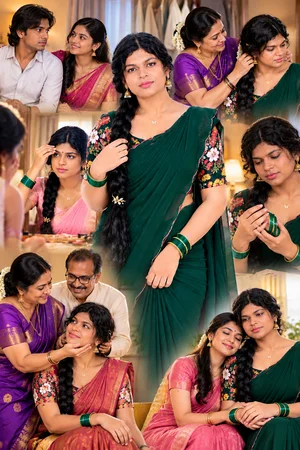
Months later, Aaradhya stood before her wardrobe and selected the deep green saree that had started everything.
She remembered the first day she had seen it laid across the bed. Back then, it had represented embarrassment, pressure, and the fear of being turned into someone she did not recognise.
Now it represented something different: the right to explore, the courage to speak, and the freedom to choose.
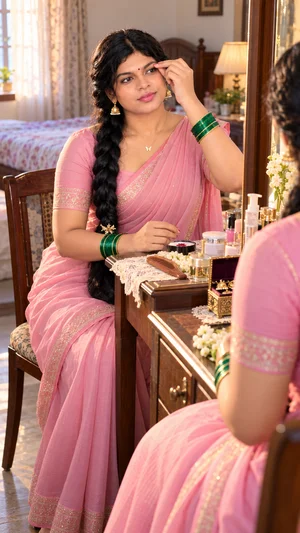
She draped the saree herself. She arranged the pleats, pinned the pallu, and checked that she could move comfortably. She brushed her long hair and formed a thick braid, fastening a small floral ornament near its end.
Then came the jewellery.
She chose the gold-toned jhumka earrings Vasundhara had helped her select, several green glass bangles, and a small pendant. She applied moisturiser, a little makeup, and a simple bindi.
There was no audience to impress. No one had ordered her to dress this way. She had chosen each detail because it made her feel at ease.
When she stepped into the living room, Vasundhara looked up from her morning tea.
“Beautiful,” she said.
Aaradhya smiled. “Thank you, Amma.”
Raghav adjusted his glasses and nodded approvingly. “You look comfortable with yourself. That matters most.”
Later, Aaradhya went to the market alone. She bought vegetables, negotiated prices, and stopped at a small shop to choose jasmine flowers for her braid. A few people glanced at her, but she kept walking, holding her shopping bag with a growing sense of independence.
At home, she prepared lunch and set aside time for her own interests. She began looking for suitable work that would allow her to support herself and build a future on her own terms. She understood that being a transgender woman did not mean she had to limit herself to domestic work; she could pursue a career, friendships, education, or any other path she wished.
That evening, she sat with Meera and her parents on the terrace.
Meera had come to understand that love did not mean deciding another person's identity. It meant listening, communicating honestly, and making room for change—even when the future was uncertain.
Aaradhya looked at the green bangles around her wrist.
“Once, I thought these were just ornaments,” she said. “Now they remind me of the women who taught me care, the mistakes we made, and the courage it took for all of us to change.”
Vasundhara rested a hand on her shoulder.
“And what do you think the saree means now?”
Aaradhya considered the question.
“It means I can choose how I want to live. It can connect me to you, to Meera, and to the traditions of this family. But it belongs to me only when I am free to choose it.”
The evening breeze moved the edge of her pallu. Her braid rested over her shoulder, and the small gold earrings caught the last sunlight.
For the first time, Aaradhya did not see a husband trying to imitate a woman, or a son-in-law trying to satisfy his mother-in-law.
She saw a person who had faced fear, questioned expectations, and begun building a life that felt honest.
And that was the transformation that mattered most.
Emotional turning point: Aaradhya stands proudly in the green saree, wearing a peaceful smile. The same saree that once represented pressure now represents self-respect, family connection, and the freedom to be herself.
Discussion (0)