Chapter 1 – The Unmarked Body
The tide had already started its slow crawl back when the beam of Manav’s torch caught the pale shape between the rocks.
He stopped. The sea wind pushed his open collar against his neck. Salt and something thicker rode the air. He stepped closer, boots grinding wet sand, and the light steadied on what was left of a woman.
She lay on her side, one arm flung out as if she had tried to crawl. The face was gone—smashed past recognition. Long dark hair matted with sand and blood. A single green glass bangle still clung to the unbroken wrist. No clothes. No purse. No phone. Just the body and the black water licking at her ankles.
Manav crouched. The torch beam trembled once, then held. He had seen worse bodies on the highway. This one bothered him for a different reason. There was nothing around her that explained who she had been.
“Inspector?” the constable’s voice came from higher up the beach, thin against the surf.
“Stay back. Call the van. And keep the locals away.”
He stayed there longer than he needed to, watching a crab edge toward the open hand and then retreat. The bangle caught the light again—cheap green glass, the kind sold in dozens at every roadside stall.
By the time the van lights swept the rocks, the body had already begun to look smaller.
---
The station smelled of stale tea and ink. Files covered Manav’s desk, but only one held his attention: the unidentified woman from the beach. Manav sat with his long hair still damp from the sea wind, tied back with the same rubber band he had used that morning. The preliminary report was already on the blotter: unidentified transgender female, estimated age mid-twenties, severe blunt trauma to the head and face, no identifying marks beyond the bangle. No missing-person match. No CCTV within two kilometres of that stretch of beach. The crime-scene team had also photographed a distinctive folding knife near the rocks, but the weapon itself was gone before the team arrived. The photographs clearly showed a small silver pattern on its handle. The last known working girl who used those rocks had left the city three months earlier.
He flipped the page. Blank.
Outside the glass partition, the duty officer laughed at something on his phone. Manav’s jaw tightened. He stood, crossed to the board, and pinned the single photograph they had—green bangle against sand. The pin went in harder than necessary.
By noon the pressure arrived the way it always did: first the quiet call from the ACP’s office, then the louder one from the local corporator’s man. “Another one of those girls. Clean it up before the papers start.” Manav answered both with the same flat voice. Zero leads. He hung up and stared at the empty whiteboard until the fluorescent light made his eyes water.
He left the station early, telling no one. The rubber band still marked a pale ring on his wrist where he had pulled it free that morning.
---
Dusk found him back on the rocks.
The place looked ordinary in the fading light—just black stones and the slow silver of the outgoing tide. He lit a cigarette, the first of the day, and let the smoke sit in his lungs. The sea had already taken most of the blood. Only a dark stain remained where the body had lain.
He heard the soft scrape of sandals behind him and turned.
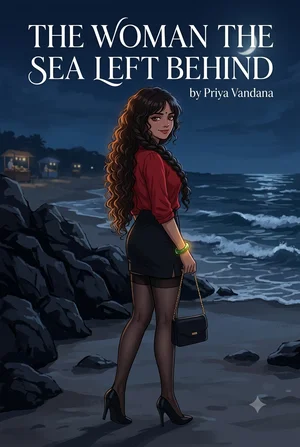
A woman stood a few paces away, watching. Soft features, long dark hair loose over one shoulder. A green glass bangle on her wrist—the exact same shade. She wore a simple salwar, the kind that did not belong on this stretch of beach after dark.
Manav’s hand stayed near his waist. “This area’s closed.”
She tilted her head, studying him as if she had expected someone else.
Manav took one step closer.
She did not move back.
He stopped anyway. Something about the distance between them felt wrong. The wind lifted her hair but did not touch the loose end of her salwar. Then her eyes dropped to the cigarette between his fingers.
He held the pack out without thinking. Old habit.
“You want one?”
She looked at the packet without reaching for it.
She stared at the open pack as if it were something she had not seen in a long time. For a moment her face went completely still. Then she smiled faintly.
“No. I quit smoking yesterday,” she said.
"You’re the one who found her,” she said. Her voice was low, warm, almost amused.
Manav kept his own cigarette between his lips. “You knew her?”
She smiled without showing teeth.
“Maybe I knew her,” she said. “Maybe I knew what happened to her.”
He waited. The sea filled the silence.
She took another look at him properly—the tired eyes, the long hair pulled back, the cheap shirt that still carried the smell of the station. “You have a very serious face, Inspector. Does it ever get tired of looking like that?”
He ignored the jab. “Name.”
She smirked. “You’ll earn it.”
Then she turned and walked up the rocks without another word, sandals silent on the wet stone.
---
The next afternoon the whiteboard was still blank.
Manav sat through two more briefings that said nothing new. The ACP’s voice on the phone had grown sharper. “Find something, Mehra. Or we close it as a random.” He hung up, pulled the rubber band from his hair, and let the dark length fall past his collar. The office fan stirred it. He stared at the single photograph of the green bangle until the edges blurred.
At dusk he returned to the rocks.
She was already there, sitting on the same stone as if she had never left. The green bangle caught the last light.
Manav stopped a few feet away. The cigarette pack was in his shirt pocket. He did not offer it this time.
“I need your help,” he said.
She looked at him for a long moment, the same half-smile playing at the corner of her mouth. The sea wind lifted a strand of her hair across her face. She did not brush it away.
“Help,” she repeated, tasting the word. “With what, Inspector?”
He held her gaze. The tired weight of the empty board and the unanswered calls sat behind his eyes.
“With her,” he said. “With whoever did that.”
She watched the smoke from his cigarette disappear into the evening air.
“Then you better talk to all the working girls here.”
The stretch was known for working girls and the men who came looking for them. It also attracted plenty of transgender women and cross-dressing performers.
He noticed something else instead. Several of them avoided looking toward the rocks when he asked about the dead woman. They were not hiding the same secret. They were hiding different fears.
Discussion (0)