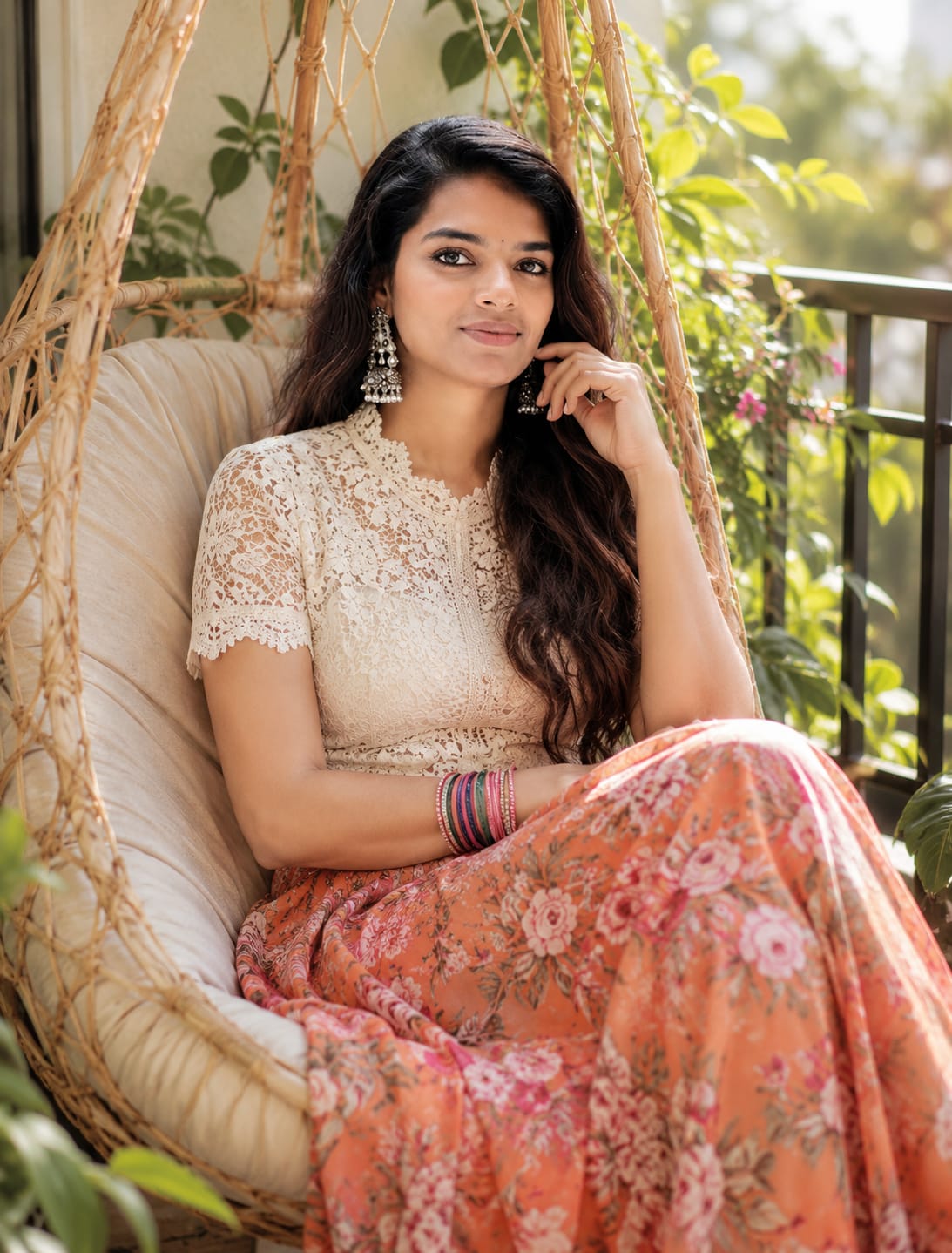
Chapter 1: The Guru’s Request
The Gurukul nestled in the lush, rain-drenched hills of Kerala was a place where time felt suspended. For eighteen-year-old Kiran, life was defined by the rhythmic *thump* of bare feet on wooden floors and the relentless discipline of classical dance. He was a student of the *Kathakali* tradition, but his physique—slender, graceful, and possessing a natural fluidity—had always marked him as an anomaly.
His Guru, an elderly man with eyes that seemed to see through stone, was staging a rare, ancient dance drama: *The Celestial Union.* It was a story requiring the lead dancer to embody a divine feminine archetype, one that demanded complete, immersive transformation.
"You have the frame, Kiran," the Guru said one evening, his voice raspy. "But to play her, you must stop 'acting' as a woman. You must study her. You must live in the silk until the silk knows the shape of your soul. If you cannot lose the boy, you will never find the goddess."
It began with the costume—a heavy, intricate Kanchipuram silk. Kiran spent weeks learning the geometry of the drape. He learned how to balance the weight of the fabric, how to walk so that the cloth rippled like water rather than bunched like a garment. He learned the *Abhinaya*—the delicate facial expressions and subtle hand gestures. He stopped cutting his hair, letting it grow long and dark, eventually braiding it with jasmine and gold threads.
The transformation was initially just for the stage, but it bled into his days. The more he practiced the feminine gait, the more the rough, hurried strides of his former life felt jarring and clumsy. He began to appreciate the softness of the fabrics against his skin. He began to prefer the quiet, contemplative pace of the women in the temple to the loud, competitive atmosphere of the other male students.
### Chapter 2: The Geometry of Silk
The performance was a triumph, but for Kiran, the end of the show felt like a bereavement. Backstage, as he stripped away the makeup and folded the heavy silk, he felt a profound, aching emptiness. The "boy" he was expected to return to felt like a dull, restrictive shell.
He didn't return to his village. He took the skills he had learned—the eye for detail, the mastery of fabric, the poise—and moved to the "City of Silk," Bengaluru. He applied for an internship at a high-end fashion house, *Veda Aesthetics*, known for its intricate, modern interpretations of traditional Indian wear.
At first, he was just a dresser, the person who steamed the garments and managed the racks. But one afternoon, a lead model fell ill just hours before a major runway presentation. The head designer, a woman known for her cold perfectionism, saw Kiran frantically steaming a sheer, embroidered gown. She saw him move—with the fluid, unconscious grace of a dancer.
"Put it on," she commanded.
### Chapter 3: The Muse of Veda
The gown fit him as if it had been woven directly onto his frame. When Kiran stepped onto the runway, he didn't walk; he glided. He brought with him the discipline of the Gurukul, the ability to hold a pose that commanded the room, and the ethereal quality of the celestial character he had once portrayed.
The show was a sensation. The press called him "the most evocative muse in years."
The fashion house quickly made him their face. They wanted that specific aesthetic—the blend of masculine elegance and feminine delicacy. But as Kiran (who had begun to present himself as "Kira" in the fashion world) spent more time in the studio, the professional requirement morphed into a personal preference.
He was surrounded by silks, chiffons, and intricate embroideries. He spent his days being styled, groomed, and presented. He found that the modern, high-fashion world afforded him a freedom the Gurukul never could. Here, his "transformation" wasn't a performance for a play—it was a life.
He began to refine his daily presentation. He adopted softer silhouettes, refined his makeup, and cultivated a voice that was soft and melodic. He wasn't playing a role anymore; he was sculpting a self.
### Chapter 4: The Synthesis
One evening, at an industry gala, Kira stood before a floor-to-ceiling mirror. He was wearing a deep emerald saree, the fabric clinging to his slender frame with effortless grace. He caught sight of a photograph on a nearby wall—a picture of him as a student at the Gurukul, years ago.
The boy in the photo looked like a stranger—a rough, unpolished sketch of the person standing in the mirror.
The transition had been so gradual, so integrated into his artistic and professional life, that there was no "moment" where he stopped being the boy and started being the woman. It had been a slow, beautiful erosion of the past, replaced by a curated, deliberate present.
"You look breathtaking, Kira," the lead designer said, walking up behind him. "You truly are the soul of this brand."
Kira smiled, a slow, radiant expression that felt entirely his own. He realized that the Guru had been right all along: he hadn't lost anything. He had simply spent his life weaving the fabric of his true self, thread by thread, until the mask became the face.
He walked into the ballroom, the silk whispering against the floor, leaving the boy behind in the silence of the past, embracing the beautiful, complex reality of the woman who was now the center of every room she entered.
Office · English
The Silk Weaver's Muse
In Progress
|
Part 1 of 1
|
1 Likes
Congratulations!
You've successfully completed reading all published parts of this story!
Follow the author to be notified when more parts are posted.
1352 Views
0 Comments
Disclaimer
CD Stories is a multilingual open platform. Stories published are generated by writers. The platform has not reviewed, modified, or validated contents and holds no liability regarding content quality or copyright infringements.
Reading preferences
100%
Discussion (0)